Designing Impact: The Black History Month Brochure Project
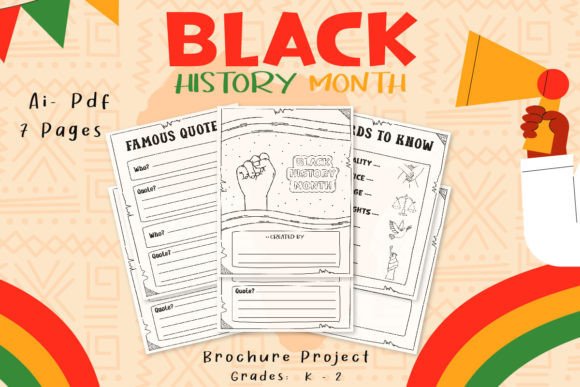
Transform educational content into a powerful visual statement with a professionally designed Black History Month - Brochure Project. This resource offers more than just a template; it provides a structured framework for creating a compelling visual narrative that honors history, educates audiences, and demonstrates sophisticated design principles. For graphic designers, marketers, and educators, this project serves as a practical case study in how thoughtful design can elevate content, ensuring that key information about prominent leaders, vocabulary, and historical context is communicated with clarity and visual impact.
The Visual Framework of Historical Communication
At its core, this brochure project is an exercise in visual hierarchy and editorial design. The seven-page, 8.5" x 11" editable layout (provided in PDF and AI files) requires a designer to make critical decisions about typography, color palette, and composition. Organizing sections like "Prominent Black Leaders" and "Famous Quotes" demands a system where headings, body text, and pull quotes work in harmony. This isn't just about making information look nice; it's about using visual design to guide the reader's journey, emphasizing pivotal facts and creating an engaging, respectful user experience.
Practical Applications Beyond the Classroom
While ideal for educational settings, the design principles within this project have broad applications across multiple creative fields. Consider how its structured approach can inform your work:
- Branding and Brand Identity: Use the brochure's cohesive style as a model for creating consistent brand collateral, from annual reports to internal communications that tell a company's story.
- Marketing Materials and Social Media Graphics: Break down the brochure's content modules into standalone social media carousels or infographic-style posts, maintaining a unified brand identity across platforms.
- Editorial Layout and Web Design: The principles of organizing dense historical information into digestible sections directly translate to web design and UI design, particularly for creating educational content hubs or news features.
- Packaging Design and Merchandise: The thematic cohesion and respectful aesthetic can inspire the design of commemorative products, apparel, or packaging that tells a story and connects with consumers on a deeper level.
Executing with Professional Precision
To maximize the impact of a project like this, apply professional design workflow considerations. Start by establishing a clear visual hierarchy that prioritizes key information—names, dates, and quotes. Select a typography pairing that balances readability for body text with authority for headlines. Your color palette should be intentional, using contrast to draw attention and unity to create flow. Ensure all design elements are scalable and consistent, whether the brochure is viewed on screen or in print. This attention to detail is what separates good design from great graphic design.
Ultimately, a well-executed Black History Month - Brochure Project demonstrates how creative assets can do more than decorate—they educate and inspire. By applying a strategic mindset to layout, typography, and imagery, designers can create materials that are not only aesthetically polished but also profoundly effective in their communication. This commitment to quality ensures that the history being presented is given the respectful and professional presentation it deserves, turning a simple brochure into a lasting piece of visual communication.